- Oil advances as jobs data bolsters U.S. economy
Market news
Oil advances as jobs data bolsters U.S. economy
West Texas Intermediate oil advanced after U.S. unemployment benefit applications dropped to a six- week low, bolstering optimism about the country’s economy, and the dollar weakened against the euro.
Futures climbed as much as 1.4 percent in New York as first-time jobless claims unexpectedly fell last week. A report tomorrow may show payrolls grew in February.
The number of Americans who filed for unemployment benefits unexpectedly fell by 7,000 to 340,000 in the week ended March 2, the lowest level since the period ended Jan. 19, according to data today from the Labor Department in Washington. The median forecast of 50 economists called for an increase to 355,000.
The dollar declined against the euro after the European Central Bank held its benchmark interest rate steady, making assets priced in the U.S. currency more attractive to investors. The dollar retreated as much as 1.2 percent against the euro to $1.3117, as the ECB kept interest rates on hold at a meeting in Frankfurt and its President Mario Draghi said data suggests the economy will stabilize this year.
A North Sea pipeline resumed operations after a five-day shutdown, weighing on Brent.
The death of Venezuelan President Hugo Chavez on March 5 should have a limited impact on the country’s oil production in the short term, while a change of leadership may foster longer- term investment and boost output, the bank said.
Crude oil for April delivery rose to $91.73 a barrel on the New York Mercantile Exchange.
Brent oil for April settlement slipped 5 cents to $111.01 a barrel on the London-based ICE Futures Europe exchange.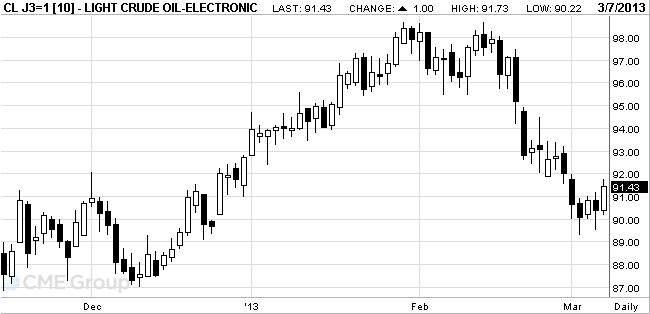
 Material posted here is solely for information purposes and reliance on this may lead to losses. Past performances are not a reliable indicator of future results. Please read our full disclaimer