- New Zealand jobless rate rises to 4.3% in Q4 from 4.0% in Q3
Market news
New Zealand jobless rate rises to 4.3% in Q4 from 4.0% in Q3
Statistics New Zealand said, the unemployment rate in New Zealand came in at 4.3% in the fourth quarter of 2018 - above forecasts for 4.1% and up from 4.0% in the three months prior (revised from 3.9%).
According to the report, the rise in the unemployment rate reflected higher growth in unemployment (up 10,000), as a share of the overall growth in the labour force (up 12,000). Unemployment was largely influenced by more unemployed men (up 8,000). For women, unemployment rose 2,000. For men and women combined, there were 12,000 more unemployed youth (15–24-year-olds).
The underutilisation rate rose to 12.1 percent in the December 2018 quarter, up from 11.4 percent in the previous quarter. This rise mainly reflected higher unemployment and underemployment.
In the latest quarter, growth in the working-age population (up 25,000) outstripped growth in the labour force. This resulted in a slight dip in the labour force participation rate (to 70.9 percent), although it remains high.
The employment rate fell to 67.8 percent, down from its peak of 68.2 percent in the September 2018 quarter, due to stronger growth in the working-age population than for employment.
Labor costs for the private sector and wages excluding overtime both were unchanged at 0.5 percent on quarter - although both missed expectations for 0.6 percent.
Average hourly earnings climbed 1.0 percent on quarter, exceeding forecasts for a gain of 0.8 percent but still down from 1.4 percent in the previous three months.
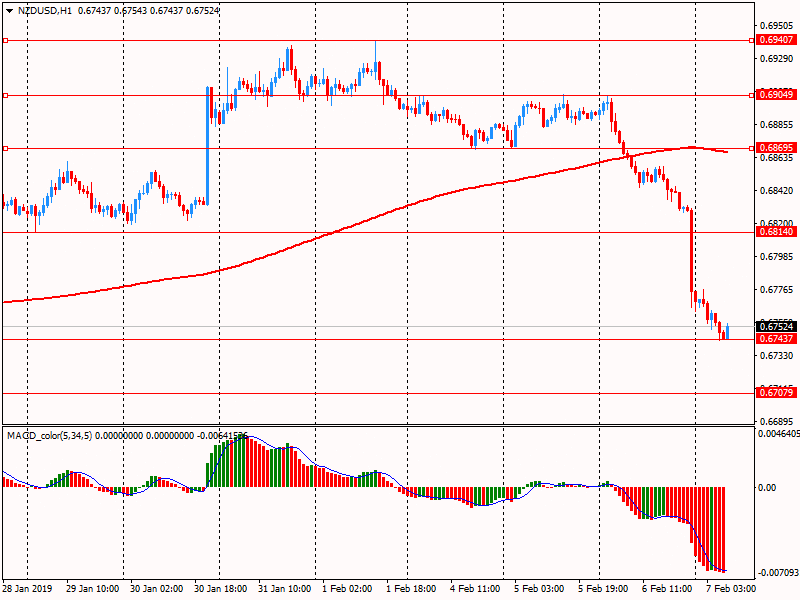
After the publication of the report, the New Zealand dollar fell sharply. Now NZD / USD is trading at 0.6752, near the January 23 low.
 Material posted here is solely for information purposes and reliance on this may lead to losses. Past performances are not a reliable indicator of future results. Please read our full disclaimer