- Oil rises on expansion in U.S., Chinese manufacturing
Noticias del mercado
Oil rises on expansion in U.S., Chinese manufacturing
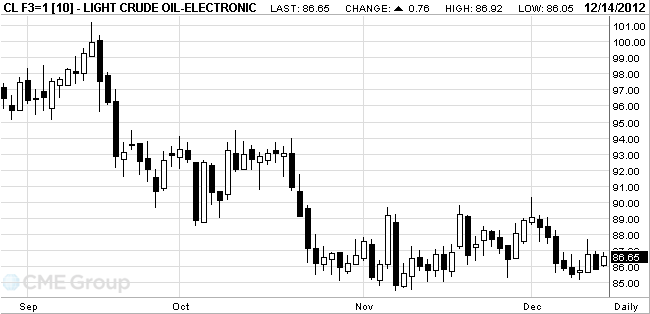
Oil rose for the third time in four days as manufacturing grew in the U.S. and China, the world’s two biggest oil-consuming countries.
Futures advanced as much as 1.2 percent as industrial production in the U.S. rose in November by the most in two years, the Federal Reserve reported. A preliminary purchasing managers’ index showed China’s manufacturing is expanding at a faster pace this month.
Output at U.S. factories, mines and utilities increased 1.1 percent last month after a revised 0.7 percent drop in October that was more than initially estimated, the Fed reported. Economists forecast a 0.3 percent advance. Manufacturing, which is a part of production, also surged 1.1 percent in November, the most this year.
In China, a preliminary purchasing managers’ index by HSBC Holdings Plc and Markit Economics indicated a reading of 50.9, for December, higher than a median estimate of 50.8 in a survey. It followed a reading of 50.5 in November, which was above the expansion-contraction dividing line of 50 and was the first growth in 13 months.
Oil also rose as the euro strengthened against the dollar after European Union chiefs pledged to seek a joint strategy for handling failing banks. A stronger euro and weaker dollar raise dollar-denominated oil’s appeal as an investment alternative.
West Texas Intermediate crude for January delivery advanced to $86.92 a barrel on the New York Mercantile Exchange. Prices are up 0.6 percent since Dec. 7 and are heading for the fifth weekly gain since Nov. 2.
Brent for January settlement, which expires today, rose $1.20, or 1 percent, to $109.11 a barrel on the London-based ICE Futures Europe exchange. The more actively traded February contract gained $1.11 to $107.57. The European benchmark grade was at a premium of $22.65 to WTI.
 Material posted here is solely for information purposes and reliance on this may lead to losses. Past performances are not a reliable indicator of future results. Please read our full disclaimer