- Gold rose for the first time in 6 sessions
Noticias del mercado
Gold rose for the first time in 6 sessions
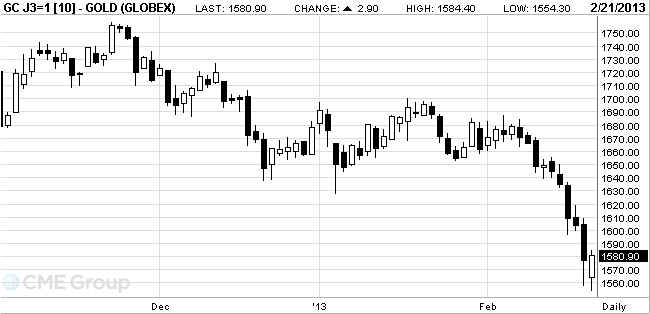
Gold prices retreated on Thursday on the eve of the achieved minimum of seven months on fears that the U.S. Federal Reserve cut the program of "quantitative easing."
Report published on Wednesday January Fed meeting showed that many officials expressed concern about the risks associated with the continuation of the acquisition of bonds. In recent years, gold prices rose mainly due to "quantitative easing" of the American central bank.
Loose monetary policy boosted gold prices to record highs against the fact that investors were looking for a hedge against inflation, which may follow an increase in liquidity in the financial system. Gold prices fell last month after the minutes of the previous meeting of the Federal Open Market Fed. According to them, some committee members were in favor of the completion of the current program of the Fed's bond purchases by the end of 2013.
Some investors use gold as a hedge against economic uncertainty, and investor demand for the metal is weakened amid rising U.S. stock indexes to multi-year highs. U.S. housing market has recovered, China seems to have escaped the sharp economic downturn and the continuing debt crisis in Europe years there is still a period of calm.
According to experts, the sale of gold is premature, because central banks are likely to retain a policy change in 2013. A strong dollar also put pressure on prices: the dollar index to a basket of currencies on Thursday rose to a three-month high.
Stocks of the world's largest gold-exchange-traded fund (ETF) SPDR Gold Trust on Wednesday fell by 1.6 percent to 1.299,164 tons - the minimum value of more than five months.
April futures price of gold on COMEX today rose to 1584.40 dollars per ounce.
 Material posted here is solely for information purposes and reliance on this may lead to losses. Past performances are not a reliable indicator of future results. Please read our full disclaimer