Noticias del mercado
-
17:40
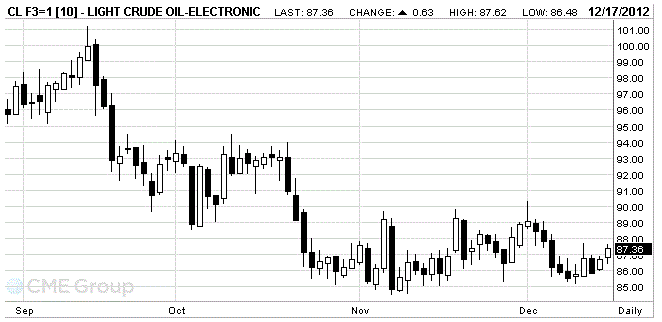
Crude is trading with a moderate increase
The cost of oil has risen today, which was caused by the fact that investors about the prospects of the transaction on the budget.
Prices rose by 1%, after House Speaker John Boehner proposed to raise income tax rates of households whose income is more than $ 1 million a year in exchange for cost containment. Earlier, Boehner previously opposed the increase in the tax rates for all income levels. However, U.S. President Barack Obama, who is in favor of tax increases that started from the amount of income of $ 250,000, rejected the proposal.
Meanwhile, Republicans and Democrats in Congress are beginning to say that you may need to wait until January to reach a budget deal. Recall that the next two weeks to prevent automatic spending cuts and tax increases totaling more than $ 600 billion, which is also known as a "financial cliff", which is to begin in January. The Congressional Budget Office has stated, failure to prevent these changes could lead to a recession in the first half of 2013.
Prices also rose on speculation the Federal Reserve will keep interest rates low to stimulate the economy after data showed that manufacturing in the New York area in December fell more than expected.
January futures price of U.S. light crude oil WTI (Light Sweet Crude Oil) rose to 87.36 dollars a barrel on the New York Mercantile Exchange.
January futures price of North Sea petroleum mix of mark Brent fell 17 cents to $ 108.11 a barrel on the London Stock Exchange ICE Futures Europe.
-
17:22
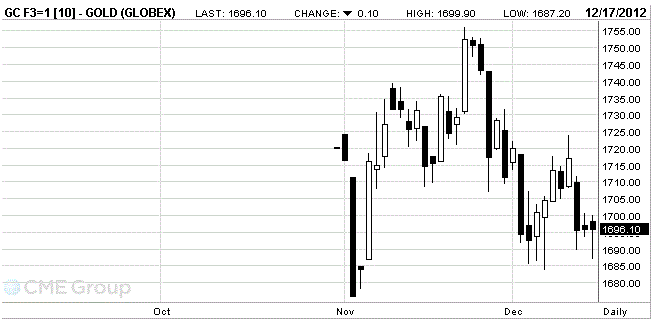
The price of gold is rising
Gold prices rose slightly, with sustained erasing earlier losses, as the prospects of monetary stimulus in Japan confront uncertainty about the prospects of "fiscal cliff" in the U.S. and published by weak data.
Spot gold prices rose by 0.10% to $ 1,696.6 an ounce after falling by almost half a percent in the previous week.
Note that, in the course of the last elections for the post of Prime Minister of Japan won Shinzo Abe, who is a proponent of aggressive monetary stimulus.
Analysts note that the increased likelihood of more aggressive monetary stimulus from the Bank of Japan may have supported the rise in gold prices in the last few hours.
Recall that the possibility of a monetary incentive encourages the growth of investment in gold as a hedge against inflation concerns.
Moreover, experts note that the scheme is more technically bearish, as the path of least resistance is now in a downward motion. After last week's worth of precious metal fell below its 100-day moving average, breaking with the strong support level of $ 1703 per ounce. Note that now gold is trading below some key moving averages, indicating the possibility of further decline.
Also today it was announced that the demand for gold in India was weak because buyers
expected rate decision from the Reserve Bank of India, which will be announced tomorrow, and could put pressure on the rupiah. Economists say that Indian gold futures are likely to fall to its lowest level since early November, as investors resorted to profit taking at the end of the year.
February futures price of gold on the COMEX is now today rose to 1696.10 dollars per ounce.
-
 Material posted here is solely for information purposes and reliance on this may lead to losses. Past performances are not a reliable indicator of future results. Please read our full disclaimer